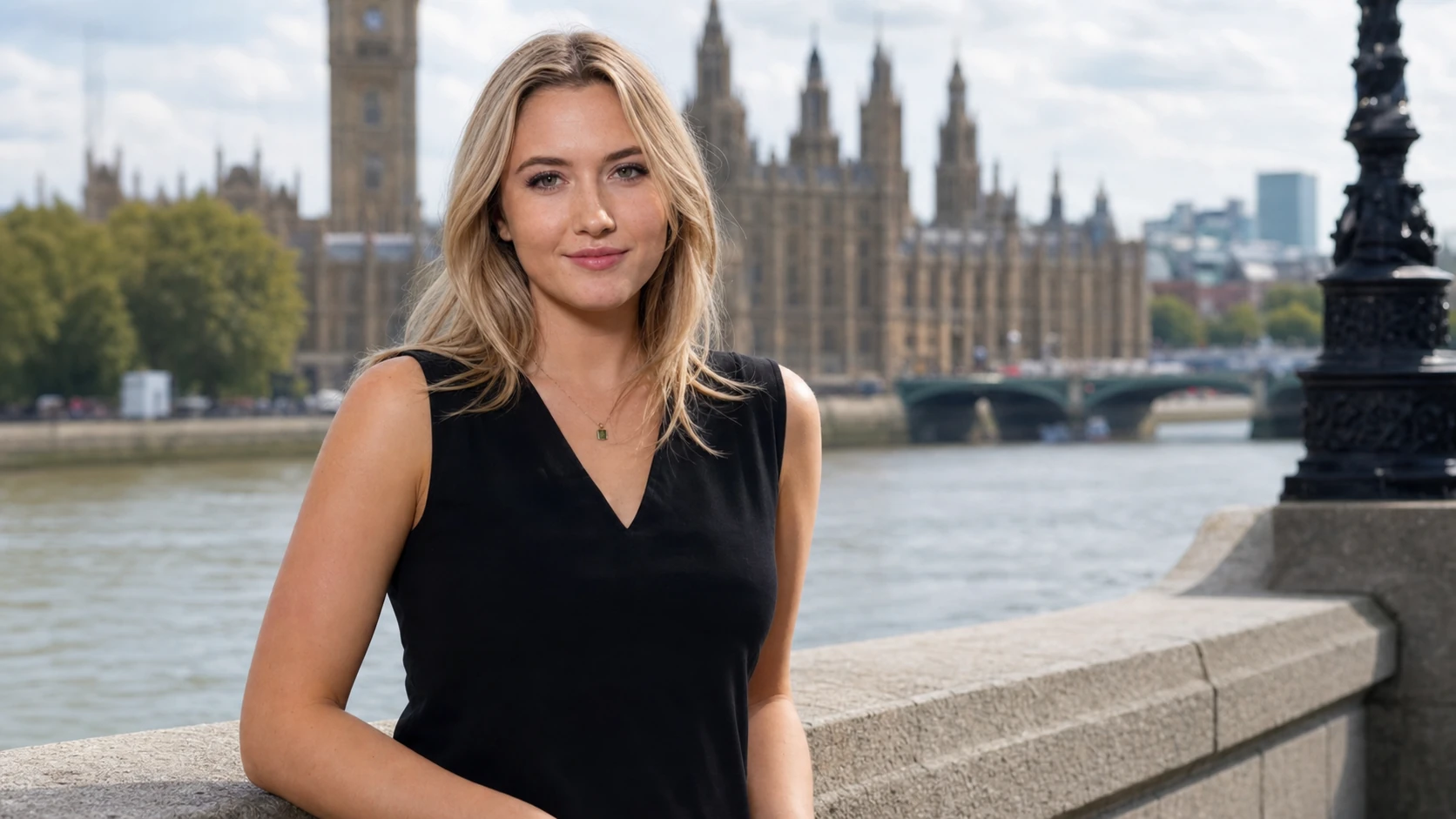
Poppy Coburn is a British journalist, editor, producer, and political commentator whose career has developed quickly across student politics, national opinion writing, television production, and newspaper editing. She is best known for her work at The Telegraph, where she has served on the comment desk and written about politics, immigration, universities, free speech, public institutions, and cultural disputes.
Coburn is 26 years old as of August 2026. The strongest available evidence indicates that she was born on 7 April 2000. Her full birth date is not displayed in a standard employer biography, but it can be established from her own account of celebrating her 19th birthday during the Oxford–Cambridge Boat Race held on 7 April 2019.
Public interest in Poppy Coburn’s age reflects how young she was when she began appearing in influential media roles. She moved from Cambridge University politics into editorial work at UnHerd, production at GB News, and a position at The Telegraph while still in her early twenties. Her professional record is visible, but details about her parents, childhood, relationships, and finances remain largely private.
Poppy Coburn’s Age and Date of Birth
Poppy Coburn was born on 7 April 2000, based on a first-person account she published about a protest at the 2019 Oxford–Cambridge Boat Race. In that article, she described the event as taking place on her 19th birthday. Official records place the race on 7 April 2019, which means she turned 19 that day.
She turned 26 on 7 April 2026. This makes her 26 years old as of August 2026.
The date should be explained carefully because Coburn has not placed it on a conventional public biography. It is supported by her own description and an independently documented event date rather than by an official birth announcement or public registry entry. That evidence is much stronger than guessing from her university attendance, but it is still helpful to state how the date was established.
Her age offers useful context for her career. Coburn was still a teenager when she entered Cambridge University governance, about 20 when she began publishing regularly for UnHerd, and 23 when she joined The Telegraph in August 2023.
Early Life and Family Background
Very little verified information is available about Poppy Coburn’s early life. Her birthplace, childhood home, parents, siblings, and wider family background have not been publicly confirmed in reliable professional profiles. Some secondary websites have attached locations or family details to her name, but those claims lack enough supporting evidence to present as fact.
Coburn appears to have chosen a public identity centred on political ideas and journalism rather than personal biography. Her staff pages, event biographies, and published work discuss her education, political development, and professional positions without giving a detailed account of her upbringing.
Her nationality is British, as shown by her education and career in the United Kingdom and her work as a commentator on British public life. Beyond that, a responsible biography should leave unverified childhood details out rather than trying to create a fuller story from weak sources.
Education at Cambridge University
Coburn studied History and Politics at the University of Cambridge. Public professional records place her degree between 2018 and 2021, and later biographies describe her as having graduated with a Bachelor of Arts with honours.
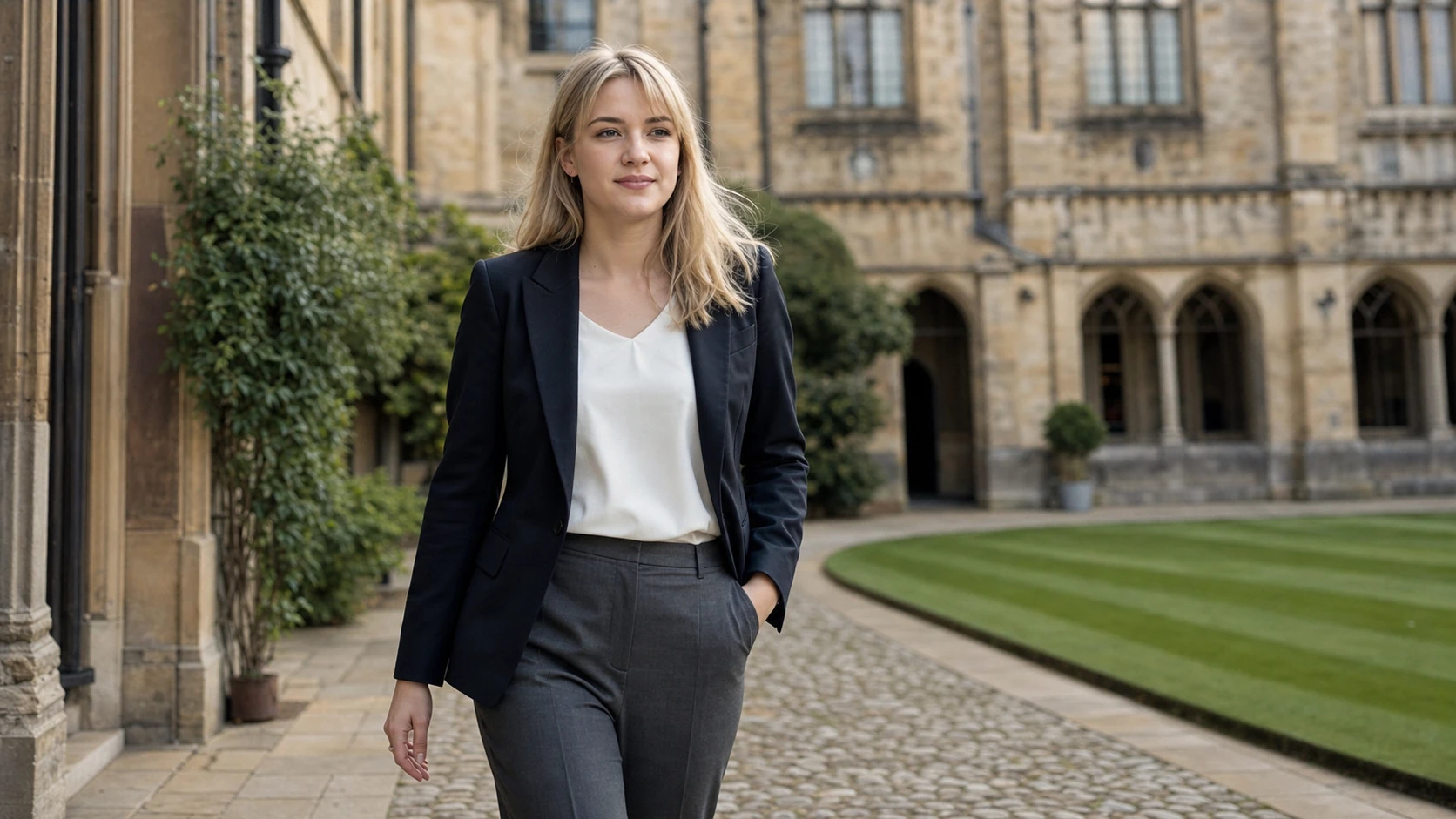
She attended Robinson College and became active in university affairs during her first year. In March 2019, she stood for election to the University Council, Cambridge’s main governing body. Student reporting from the period described her as a first-year undergraduate and connected her campaign with environmental and student activist groups.
Coburn won the election and served as a student representative on the Council. That position gave her a formal role in university governance rather than limiting her political activity to demonstrations or debating societies. Council business included questions involving university administration, policy, property, finance, and institutional priorities.
Cambridge records from that period sometimes spell her surname as “Cockburn,” while her journalism and current professional identity use “Coburn.” The matching college, role, dates, and later biographies indicate that the records concern the same person. No dependable public explanation has been given for the spelling difference.
Her academic interests included political thought, with later fellowship biographies identifying Thomas Hobbes as a particular focus. Hobbes’s writing on authority, order, fear, political obligation, and the power of the state connects naturally with themes that later appeared in Coburn’s journalism.
Student Politics and Changing Views
Coburn’s present reputation is closely associated with conservative political commentary, but her earlier record shows that her views changed during and after university. As a Cambridge student, she supported fossil-fuel divestment and received backing from environmental campaigners during her University Council election.
In 2020, she co-wrote an article for the student newspaper Varsity arguing that the Labour Party should remain committed to socialist principles rather than move back toward the political centre. That article provides clear evidence that her political outlook at university differed from the positions she later expressed in national media.
Coburn has written publicly about her disillusionment with parts of the activist left. She identified a protest at the 2019 Oxford–Cambridge Boat Race as an important moment in that change. The demonstration targeted the universities’ investments in fossil fuels, but she later said she became troubled by the behaviour and claims of some fellow protesters.
Her political development appears to have happened over time rather than through one sudden conversion. Still, the Boat Race episode mattered enough for Coburn to use it when explaining why she left Extinction Rebellion and moved away from her earlier activism.
This background became part of her authority as a commentator. She often writes about campus politics, protest movements, progressive institutions, and ideological conformity from the position of someone who once participated in some of those circles.
Early Journalism at UnHerd
Coburn began building a national profile through UnHerd, where she was identified as an editorial trainee in 2021. Her author archive from that period includes articles about universities, employment, feminism, pornography, social media, political activism, and free speech.
She was around 20 when her earliest UnHerd articles appeared and turned 21 in April 2021. The publication gave her an opportunity to move from student writing into professional opinion journalism soon after completing university.
Her early work established a direct and argumentative style. Coburn often began with a widely accepted political or cultural claim and then questioned whether institutions were delivering the results they promised. She drew on personal experience, political theory, and contemporary examples rather than writing as a detached news reporter.
Her essay about leaving Extinction Rebellion became one of her most useful biographical pieces. It documented her earlier involvement in environmental activism, described the 2019 Boat Race protest, and provided the clearest available evidence of her age.
Coburn also wrote for other publications, including The Critic, PoliticsHome, The Express, and The Telegraph. These bylines helped establish her as a young commentator interested in ideology, media standards, universities, migration, and the operation of public institutions.
Work as a GB News Producer
Before joining The Telegraph as a staff editor, Coburn worked at GB News as a prime-time producer. Professional biographies and reports announcing her later newspaper appointment confirm the role.
Television production gave her a different set of responsibilities from opinion writing. Producers may help select subjects, prepare interviews, find guests, coordinate segments, react to breaking news, and shape the running order of a programme. That experience placed Coburn behind the scenes of live and recorded political broadcasting.
Her time at GB News also fitted the direction of her political commentary. The channel became known for opinion-led programmes, debates about British identity, criticism of established institutions, and a strong focus on culture and politics.
There is no complete public record of every programme or segment Coburn worked on. It would therefore be inaccurate to credit her with specific editorial decisions unless her name appears in a formal production record. What can be confirmed is that she worked as a prime-time producer before moving to The Telegraph.
Joining The Telegraph
Coburn joined The Telegraph in August 2023 at the age of 23. Reports announcing the appointment described her as an assistant comment editor with a focus on the United States, while the newspaper’s later author profile identified her as an Associate Comment Editor.

The title differences reflect the way editorial responsibilities can change over time. External event biographies have also described her as an assistant US opinion editor or acting Deputy Comment Editor. The safest current description is the title used by the newspaper itself.
Comment editors work at the centre of a newspaper’s opinion operation. They commission articles, edit submissions, assess arguments, respond to the daily news cycle, and help decide which writers and subjects should receive space. Coburn also continued to publish articles under her own name.
Her writing for The Telegraph has covered immigration, free speech, political parties, universities, charities, generational conflict, social media, and the limits of state power. These subjects continue themes that were present in her earlier work, but the newspaper gave her a larger national platform.
A public Cambridge Union biography also stated that Coburn was working on a book for Polity about the development of Britain’s human-rights system and its effect on immigration policy. The project was publicly announced, but a finished publication should not be assumed unless it is formally released.
The 2024 Publius Fellowship
In 2024, Coburn was selected as a Publius Fellow at the Claremont Institute in the United States. She was 24 during the fellowship year.
The programme focuses on American political thought, constitutional government, and conservative intellectual traditions. Coburn’s selection matched the transatlantic focus of part of her Telegraph work and placed her within an American network of writers, scholars, and political professionals.
Her fellowship biography described her as a Cambridge graduate, former University Council representative, former GB News producer, and Telegraph editor. It also highlighted her academic interest in Thomas Hobbes.
The fellowship helped broaden Coburn’s profile beyond British media. Her later work often moved between debates in the United Kingdom and the United States, especially on immigration, government authority, free expression, universities, and the future of conservative politics.
Public Speaking, Podcasts, and Broadcast Work
Coburn’s public visibility grew as she moved beyond written columns. She appeared in Cambridge Union debates, political interviews, panel discussions, and other public events focused on free speech, class, democracy, and national politics.
Her return to Cambridge as a guest speaker marked a contrast with her earlier role as a student activist and elected representative. By then, she was appearing as a journalist and conservative commentator rather than as a participant in university campaigns.
During 2026, Coburn also became more visible in The Telegraph’s podcast and video output. She appeared in Weekend T episodes alongside columnist Michael Deacon, discussing current political and cultural stories in a less formal style than a newspaper column.
Audio and video work exposed her to audiences who may not regularly read comment pages. That broader presence also helps explain why searches for Poppy Coburn’s age, family, and personal life have increased.
Political Outlook and Public Image
Coburn is generally identified with the British right, but her political history is more complicated than a simple label suggests. Her university record includes support for environmental activism and socialist ideas, while her later journalism became sharply critical of progressive movements and institutions.
She often writes from a sceptical position toward political language that she believes hides poor results or weak accountability. Her subjects include immigration systems, public charities, university culture, media behaviour, free speech, feminism, and the authority of the state.
Supporters may see her as a direct writer willing to challenge established assumptions. Critics may regard her arguments as too severe or ideological. That division is common for opinion journalists, whose work is meant to persuade rather than merely record events.
Her relative youth is part of her public image because she belongs to a generation that experienced social media politics, campus activism, and ideological conflict from inside universities. Her writing often draws on that experience while rejecting many of the movements with which she was once associated.
Marriage, Relationships, and Private Life
Poppy Coburn’s relationship status is not publicly confirmed. Reliable professional biographies do not state that she is married, engaged, or in a publicly identified relationship.
There is also no confirmed information about children. Claims naming a husband, boyfriend, or family member should be treated cautiously unless Coburn or a dependable first-party source verifies them.
Her decision to keep those details private is consistent with the rest of her public profile. She discusses her political development and professional experiences, but she has not turned her family or romantic life into a major part of her media identity.
The absence of public information does not prove that she is single. It means only that her personal relationships remain outside the verified public record.
Net Worth and Income Sources
Poppy Coburn’s net worth is not publicly known. No credible financial disclosure, business filing, employer statement, or reliable estimate establishes the value of her assets.
Her known income sources are connected to journalism and media. These include editorial employment at The Telegraph, earlier television production work, freelance writing, public appearances, and possible speaking or publishing work.
Online biography sites sometimes assign exact net-worth figures to journalists without explaining how the numbers were calculated. Such estimates should not be treated as evidence, especially for a staff editor whose salary and personal finances are private.
Coburn’s career suggests a stable professional income, but any claim that she is worth a specific amount would be speculation. There is also no verified record of major companies, investments, property holdings, or commercial ventures in her name.
Recent Work and Current Status
As of 2026, Coburn remains associated with The Telegraph as an editor and commentator. Her recent work includes written opinion, podcast appearances, video discussions, and public debates.
Her visibility has grown beyond the role of a newspaper editor working behind the scenes. Through recurring audio and video appearances, she has become a recognisable voice within a younger group of British conservative commentators.
She continues to write about political authority, migration, universities, culture, and ideological change. Her own shift from student activism to right-leaning journalism remains one of the most distinctive parts of her biography.
There is no public indication that she has left journalism or stepped away from The Telegraph. Her current profile points instead toward a career combining editorial responsibility with a larger public-facing role.
Frequently Asked Questions
How old is Poppy Coburn?
Poppy Coburn is 26 years old as of August 2026. She turned 26 on 7 April 2026.
What is Poppy Coburn’s date of birth?
The strongest available evidence indicates that she was born on 7 April 2000. The date is derived from her own statement that she celebrated her 19th birthday during the Boat Race held on 7 April 2019.
Where did Poppy Coburn study?
She studied History and Politics at the University of Cambridge. She attended Robinson College and served as an elected student representative on the University Council.
What does Poppy Coburn do?
Coburn is a British journalist, political commentator, and editor. She works at The Telegraph and has also appeared in podcasts, debates, interviews, and video discussions.
Did Poppy Coburn work at GB News?
Yes. She worked as a prime-time producer at GB News before joining The Telegraph in August 2023.
Is Poppy Coburn married?
Her marital and relationship status is not publicly confirmed. Dependable biographies do not identify a husband, spouse, or partner.
What is Poppy Coburn’s net worth?
Her net worth is not publicly known. Claims assigning her a specific fortune are unsupported because her salary, assets, and personal financial records have not been disclosed.
Conclusion
Poppy Coburn has built an unusually visible journalism career before the age of 30. At 26, she has already moved through Cambridge University governance, trainee journalism, television production, national opinion writing, and editorial work at one of Britain’s major newspapers.
Her biography also tells a story of political change. She began university life close to environmental and left-wing activism, then became a critic of the institutions and movements she once supported. That shift now informs much of her writing and public commentary.
Coburn’s professional life is much easier to document than her private one. Her education, media roles, age, and political development are supported by public evidence, while her family background, relationships, birthplace, and finances remain unconfirmed.
Her importance lies less in personal celebrity than in the position she occupies within British political media. She represents a younger generation of commentators shaped by campus activism, online political conflict, and the growing overlap between newspapers, podcasts, television, and public debate.