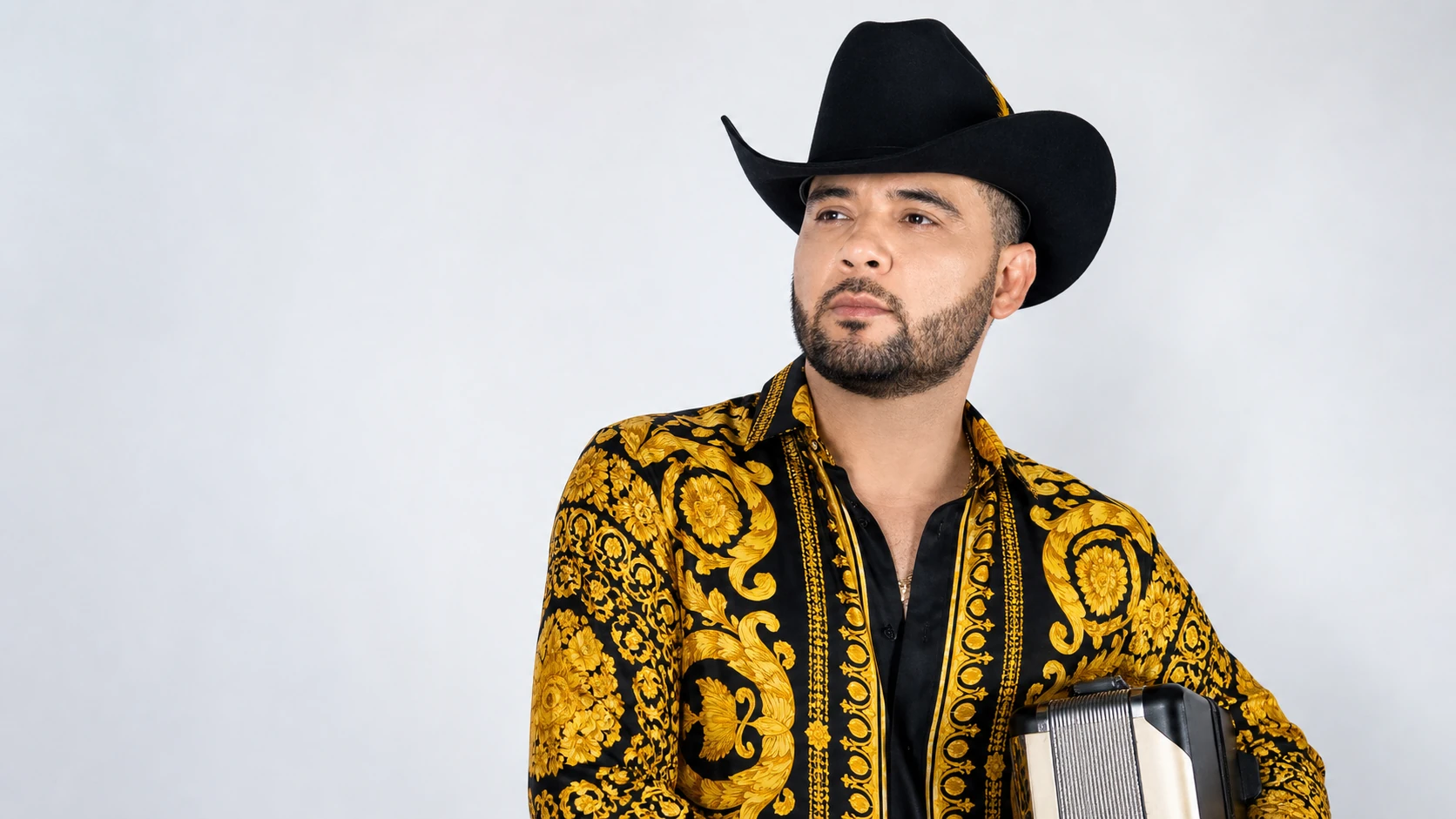
Darey Castro has spent decades building a career that connects two eras of regional Mexican music. As the singer, accordionist, songwriter, and central figure behind Los Dareyes de la Sierra, he first gained broad recognition through emotional banda and sierreño recordings, then found a new generation of listeners through collaborations with Peso Pluma, Xavi, Tito Double P, and other younger stars. His story is not one of overnight success. It is a long account of survival, adaptation, songwriting, and a late-career return to major charts.
The public knows far more about Castro’s music than about his private life. Reliable profiles document his roots in Sonora, his work with Los Dareyes de la Sierra, his early commercial success, his songwriting honors, and his renewed popularity in the 2020s. His exact age, full family background, marriage history, and personal finances are not publicly confirmed, despite many unsupported claims online.
Early Life in Sonora
José Darey Castro is from Navojoa, Sonora, Mexico. His regional background is central to understanding his music because Sonora has a strong tradition of corridos, norteño, sierreño, banda, guitar-led ballads, and accordion-based performance. Castro did not emerge from a polished pop system. His musical identity grew from the sounds and storytelling traditions of northern Mexico.
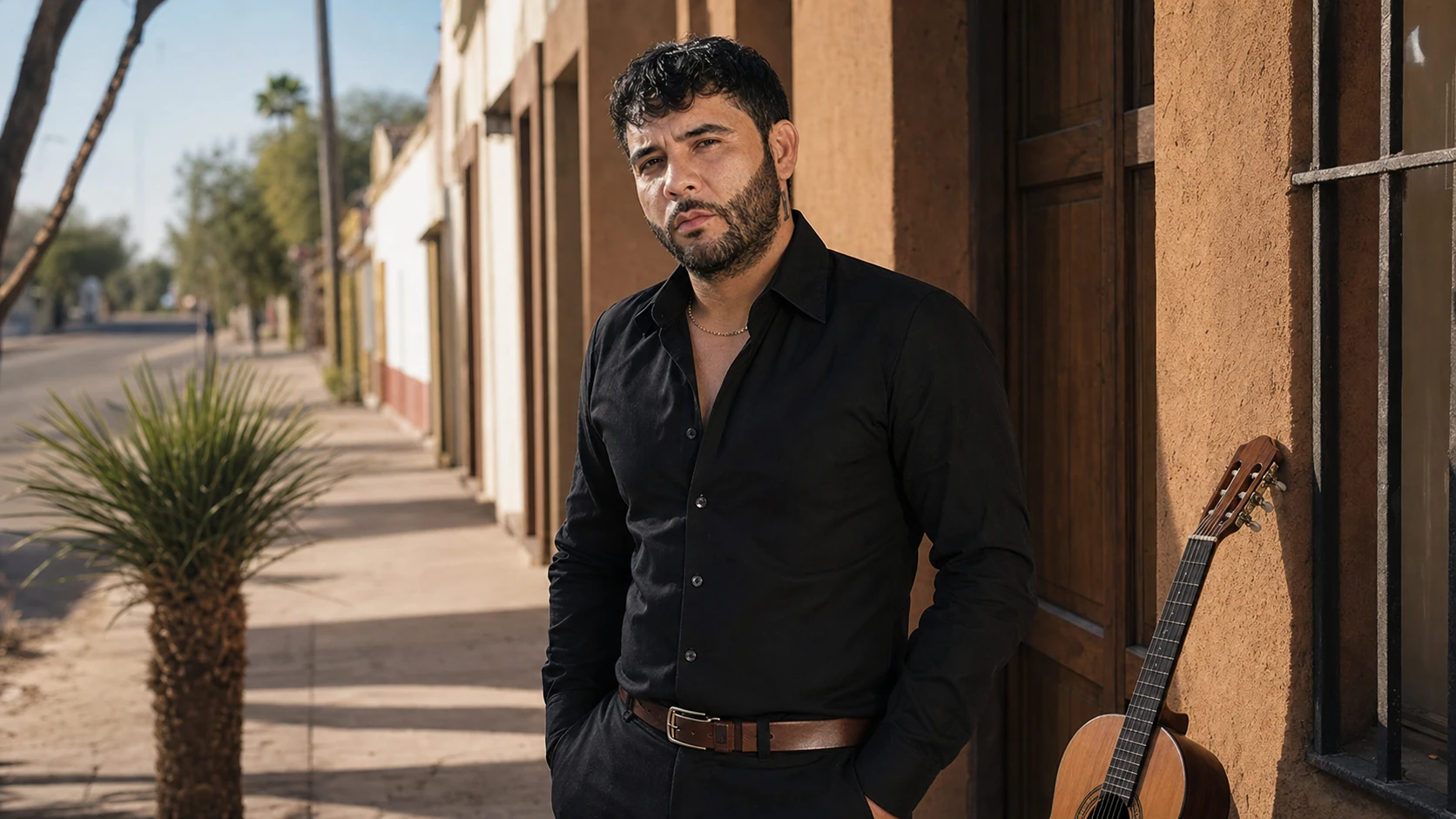
In a later interview, Castro recalled receiving a guitar from his father when he was about 10 years old. He did not take to the instrument seriously at first and even broke it during a childhood outburst. Around five years later, he returned to the guitar and began treating music with greater commitment.
Little reliable information is available about his parents, siblings, schooling, or childhood household. Those details have not been established in strong public profiles, and they should not be replaced with assumptions. What is clear is that Castro began developing as a musician during his teenage years and eventually built a professional life around singing, playing, writing, and recording.
From Los Alteños to Los Dareyes de la Sierra
Before Los Dareyes de la Sierra became his main professional identity, Castro was associated with Los Alteños de la Sierra. Accounts of his early career describe him as the group’s vocalist and leader. That phase came to a violent end in 2004, when an attack involving the group left Castro questioning whether he would continue in music.
Published accounts do not always agree on every detail of the incident, but they consistently treat it as a major dividing line in his career. It ended one chapter and preceded the formation or reconstruction of the project that became Los Dareyes de la Sierra. The experience also gave added meaning to the themes of loss, endurance, and renewal that later appeared throughout his work.
Sources differ on the exact starting year of Los Dareyes de la Sierra. Some discographies trace the project’s roots to the late 1990s, while other profiles place its present form in the years after 2004. The most accurate reading is that Castro’s recording history began earlier, but the Dareyes identity became firmly established after the collapse of his previous group.
Over time, Los Dareyes de la Sierra became closely identified with Castro himself. Although the name suggests a permanent ensemble, the modern act functions mainly as his artistic vehicle, supported by changing musicians and collaborators. His voice, accordion playing, songwriting, and production choices remain the project’s defining elements.
Building a Regional Mexican Career
Castro and Los Dareyes de la Sierra developed their audience through a steady stream of recordings rather than one sudden breakthrough. Their early catalog included albums and songs rooted in corridos, romantic ballads, banda, and sierreño music. Releases such as Duelo de Shakas, El Águila Real, Cigarro de Hoja, La Dueña de Mi Vida, Directo, and En la Mira helped establish the group’s reputation.
The material showed Castro’s range from the beginning. He could sing songs built around loyalty, danger, status, and coded biography, but he was equally comfortable with heartbreak and emotional dependence. Tracks such as “Quisiera Ser una Lágrima,” “Sufre,” and “Enséñame a Olvidar” gave him a strong identity as a singer who could sound wounded without losing the rough regional character of his voice.
He also showed a willingness to record subjects that were not yet common in mainstream regional Mexican music. The 2007 song “Los En-Kush-ados,” for example, referred openly to marijuana culture years before similar themes became routine in commercially successful corridos. The song did not make him a mainstream star on its own, but it showed that parts of his later connection to younger corrido artists had deep roots.
“Hasta el Día de Hoy” and National Recognition
Castro’s biggest early breakthrough came with “Hasta el Día de Hoy,” a song from the 2008 album Con Banda. The track became one of the most recognizable recordings in the Los Dareyes catalog and received sustained regional Mexican radio play. Its success brought Castro a wider audience beyond the group’s established base.
The song’s appeal came from its emotional clarity. Castro sings from the perspective of someone still carrying the pain of a failed relationship long after time was supposed to have eased it. His strained, direct delivery gives the song its lasting power, while the banda arrangement gives the heartbreak a larger dramatic scale.
“Hasta el Día de Hoy” also helped place Los Dareyes de la Sierra among the visible regional Mexican acts of the late 2000s. The song and Con Banda received recognition in connection with the Billboard Latin Music Awards. That period remains the first major commercial peak of Castro’s career.
Latin Grammy Nomination and Songwriting Honors
In 2009, Una Copa Más received a Latin Grammy nomination for Best Banda Album. Los Dareyes de la Sierra did not win the category, but the nomination marked an important achievement for Castro and confirmed that the project had gained industry respect.
Castro’s reputation also rests on his work as a songwriter. “Enséñame a Olvidar,” which he co-wrote with Edgar Cortázar and Adrián Pieragostino, received recognition at the BMI Latin Music Awards in 2013. The honor showed that his contribution extended beyond performance.
His writing later found success through other performers. “No Me Dolió,” recorded by La Original Banda El Limón, earned BMI recognition in 2016. That outside recording demonstrated that Castro’s songs could succeed independently of his own voice and group identity.
These songwriting credits are central to his career. They show that he has been involved in creating the material associated with his name rather than simply interpreting songs selected by others. They also represent a likely source of publishing income, though the exact value of those royalties is not publicly available.
Staying Active Through Industry Change
Castro continued releasing music throughout the 2010s and early 2020s, even when Los Dareyes de la Sierra no longer occupied the same level of mainstream attention. Albums, live recordings, tributes, and compilations kept the catalog active while regional Mexican music underwent major changes.
Streaming became more important than radio and physical sales, while a younger generation of artists changed the sound and public image of corridos. Performers such as Natanael Cano, Junior H, Peso Pluma, Fuerza Regida, and Luis R Conriquez brought faster release schedules, social-media promotion, new fashion codes, and heavier production to the genre.
Castro’s challenge was to adapt without sounding as though he was copying younger singers. His advantage was that he already had credibility in corridos, banda, romantic songs, and sierreño music. He did not need to invent regional roots. He needed a way to place those roots inside the streaming era.
“VVS” and a New Generation of Listeners
The major turning point came in 2023 with “VVS,” a collaboration by Peso Pluma, Edgardo Nuñez, and Los Dareyes de la Sierra. The song appeared on Peso Pluma’s album Génesis and reached the Billboard Hot 100, giving Dareyes a first appearance on the all-genre United States singles chart.
“VVS” introduced Castro to many listeners who had never heard his late-2000s hits. The collaboration worked because he was treated as a current participant rather than a nostalgic guest. His voice connected the song to an older regional tradition, while Peso Pluma and Nuñez brought access to a younger streaming audience.
The success was also a reminder that the modern corrido boom did not emerge without history. Castro had already spent years recording songs about ambition, loyalty, danger, pleasure, status, and personal codes. The new production style changed, but many of the themes were familiar.
“Poco a Poco” and Renewed Songwriting Success
Castro followed “VVS” with “Poco a Poco,” a collaboration with Xavi. The song reached the upper portion of Billboard’s Hot Latin Songs chart and remained there for several weeks. Its performance showed that the renewed attention around Dareyes was not tied to one Peso Pluma appearance.
“Poco a Poco” also returned Castro to the spotlight as a songwriter. BMI recognized the composition at its 2026 Latin Awards. The honor came more than a decade after his earlier BMI awards, linking two very different periods of regional Mexican music through the same writer.
That long gap is one of the most striking parts of Castro’s career. Many performers receive recognition within one concentrated period and then rely mainly on old songs. Castro instead found a way to earn new attention while continuing to write material for the current market.
Redención and the 2025 Comeback
Los Dareyes de la Sierra released Redención in May 2025 through Double P Records. The album featured collaborations with artists including Tito Double P, Peso Pluma, Neton Vega, and Gabito Ballesteros. A deluxe edition followed and expanded the project considerably.
The title reflected the album’s purpose. It was Castro’s first major studio release in several years and was presented as a return to wide public attention. The project performed strongly on streaming platforms and helped establish that his new audience extended beyond curiosity about an older artist.
Songs such as “Vita Fer,” “Supreme,” “Boneless,” “Te Engañé,” and “Frecuencia” placed Castro beside performers whose careers were built in the streaming age. Yet his voice remained the center of the record. The album did not hide his history; it used his experience as part of its appeal.
“Frecuencia” became especially important. The song reached the Billboard Hot 100 and also performed strongly in Mexico. Unlike “VVS,” it carried Dareyes as the primary act, showing that listeners were willing to follow Castro outside a collaboration led by a younger superstar.
Touring and the Release of SABIA
The success of Redención led to the first official United States headline tour billed for Dareyes de la Sierra. The 2025 tour included dates in Los Angeles, Las Vegas, San Diego, Chicago, Houston, Portland, and other cities. It gave Castro the chance to perform for longtime fans and newer listeners in the same venues.
His live challenge was clear. Older audiences expected “Hasta el Día de Hoy,” “Enséñame a Olvidar,” and other established songs, while younger concertgoers came for “VVS,” “Frecuencia,” and the Redención material. The tour allowed both periods of his career to exist within one show.
Castro followed Redención quickly with SABIA, released in April 2026. The 21-track album placed more of the focus on him rather than relying on a long list of featured guests. Songs including “MATCHA,” “Agua y Jabón,” “Play Mode,” “MAHOMA,” and “DESCONTROL” continued the modern sound of his comeback.
The quick follow-up mattered. It showed that Redención was not intended as a one-time return built around famous collaborators. Castro was entering a new period of regular recording, touring, and streaming activity.
Musical Style and Public Image
Castro’s voice is the most recognizable feature of his music. It has a rough, pressed quality that suits both heartbreak songs and corridos. He rarely sounds polished for its own sake; the emotion often comes from strain, emphasis, and the feeling that he is speaking directly to someone.
The accordion remains another key part of his identity. Even when newer production adds heavy bass, electronic details, or sharper percussion, the instrument keeps the music tied to northern Mexican traditions. That balance allows him to sound current without losing the style that established his reputation.
His public image is built mainly around the music rather than celebrity exposure. Castro has not made his private life the center of his promotion, and major interviews tend to focus on his career, creative changes, and survival. This relative privacy has left room for unsupported claims online, but it has also kept attention on his work.
Age, Birthday, and Personal Details
Darey Castro’s exact date of birth and age are not publicly confirmed by a reliable source. Some biography websites publish precise dates, but the information conflicts across sites and is not supported by strong documentation. It would therefore be misleading to present a specific age as fact.
His nationality is Mexican, and his birthplace is widely identified as Navojoa, Sonora. Details about his formal education and professional training are also not well documented. His development appears to have come mainly through practical experience as a musician, singer, writer, and group leader.
Marriage, Children, and Family Life
Castro has kept his relationships and family life largely private. Reliable public profiles do not clearly confirm the identity of a wife or partner, nor do they establish whether he has children. Social-media posts and copied biography claims are not enough to verify those details.
That privacy is consistent with the way Castro has presented himself throughout his career. He speaks publicly about music, difficult career experiences, collaboration, and artistic renewal, but he has not turned relatives into part of his public brand. Any account of his personal relationships should respect those limits.
Net Worth and Income Sources
Darey Castro’s net worth is not publicly confirmed. Websites that assign him an exact fortune do not have access to his contracts, royalties, taxes, touring expenses, property holdings, debts, or publishing agreements. Their figures should be treated as unsupported estimates rather than verified financial information.
His likely income sources include recording royalties, streaming payments, concert earnings, songwriting and publishing royalties, production work, merchandise, and licensing. His BMI-recognized compositions and successful catalog suggest that publishing may be an important part of his income.
Touring and streaming can produce large gross figures, but gross revenue is not the same as personal wealth. Musicians must cover payments to band members, managers, promoters, agents, venues, crew, travel providers, and production staff. Without private financial records, a precise net-worth estimate would create false certainty.
Frequently Asked Questions
Who is Darey Castro?
Darey Castro is a Mexican singer, accordionist, songwriter, and producer from Navojoa, Sonora. He is the central figure behind Los Dareyes de la Sierra and is known for songs such as “Hasta el Día de Hoy,” “Enséñame a Olvidar,” “VVS,” “Poco a Poco,” and “Frecuencia.”
Is Darey Castro the lead singer of Los Dareyes de la Sierra?
Yes. Castro is the lead vocalist and accordionist most closely identified with Los Dareyes de la Sierra. The group name remains in use, but the modern project is largely centered on his voice and creative direction.
How old is Darey Castro?
His exact age is not publicly confirmed by a reliable source. Conflicting birth dates appear on biography websites, so a precise age should not be treated as established fact.
Where is Darey Castro from?
He is from Navojoa, Sonora, Mexico. His music reflects the corrido, banda, norteño, and sierreño traditions associated with northern Mexico.
What is Darey Castro’s biggest song?
“Hasta el Día de Hoy” remains his best-known early hit. “VVS” became a major streaming-era collaboration, while “Frecuencia” was an important later success credited primarily to Los Dareyes de la Sierra.
Did Darey Castro win a Latin Grammy?
No. Los Dareyes de la Sierra received a Latin Grammy nomination for Una Copa Más in 2009, but the album did not win. Castro is accurately described as part of a Latin Grammy-nominated act.
What is Darey Castro doing now?
As of 2026, Castro remains active with Los Dareyes de la Sierra. He followed the 2025 album Redención and its tour with the 2026 release SABIA, continuing a renewed period of recording and public attention.
Conclusion
Darey Castro’s career stands out because it stretches across major changes in regional Mexican music without losing its central identity. His early success came through radio, banda arrangements, romantic songs, and traditional corridos. His later return was driven by streaming, collaboration, and a younger audience.
The strongest part of his story is not a single chart position or famous guest. It is his ability to remain credible after violence, industry change, long periods outside the mainstream, and shifts in public taste. He returned without pretending his earlier career had never happened.
His private life remains largely outside the public record, and claims about his age, family, or wealth should be treated carefully. The documented career already offers a fuller story: a Sonoran musician who became a recognized singer and songwriter, endured serious setbacks, and found new relevance decades after his first recordings.
For listeners who know only the recent collaborations, Castro’s older catalog explains why younger artists welcomed him. For longtime fans, the current success confirms that Los Dareyes de la Sierra still has a place in the music’s present, not only its past.