
Annabel Denham has built a prominent place in British political commentary through a career spanning Parliament, business journalism, entrepreneurship policy, think-tank communications, newspaper editing, and television debate. She is now known as a columnist and senior political commentator at The Telegraph, where she writes about government, regulation, work, family policy, taxation, and the direction of British politics.
Readers searching for “Annabel Denham age” often encounter conflicting or unsupported claims. Her exact date of birth and age have not been publicly confirmed by Denham, her employer, or another dependable first-party source. Based on her documented university years, she is likely around 40 as of 2026, but that remains an estimate rather than a verified fact.
Her professional record is much clearer. Denham has worked for former Conservative MP Peter Lilley, held editorial roles at City A.M., helped establish the Female Founders Forum, served as director of communications at the Institute of Economic Affairs, and later moved into senior opinion journalism at The Telegraph. Her rise reflects a steady progression from political research and business reporting to a public-facing role in national debate.
Annabel Denham’s Age and Date of Birth
Annabel Denham’s full date of birth is not publicly confirmed. Reliable professional profiles describe her education and career but do not state the day, month, or year she was born.
Her education history provides the strongest clue to her likely age. Denham studied History and French at the University of Manchester from 2004 to 2008. She then completed a master’s degree in International Studies and Diplomacy at SOAS University of London from 2009 to 2010.
A student beginning university in 2004 at the usual age of 18 or 19 would most likely have been born around 1985 or 1986. Allowing for a gap year, delayed entry, or a different educational path, a cautious estimate would place her birth year somewhere in the mid-1980s.
That would make Denham approximately 39 to 42 years old in 2026. Describing her as “around 40” is reasonable, but assigning her an exact age without a confirmed birthday would create false certainty.
The lack of a public birth date is not unusual for journalists whose public identity is based on their work rather than celebrity coverage. Denham’s official biographies focus on her professional experience, political interests, and current role.
Early Life and Family Background
Little reliable information is available about Annabel Denham’s childhood, parents, siblings, or early home life. Her birthplace has also not been publicly confirmed by a dependable source.
Some online biographies describe her as London-born, but her professional connection to London does not prove that she was born there. She studied and worked in the capital for much of her adult life, and she has held roles closely tied to Westminster, national media, and policy organisations.
Denham has not made her family background a major part of her public profile. Interviews, newspaper biographies, and employer pages generally begin with her education or career rather than her upbringing.
That privacy should be respected. There is no sound basis for inventing details about her parents’ professions, family finances, schools, or childhood ambitions.
Education and Academic Background
Denham studied History and French at the University of Manchester between 2004 and 2008. The four-year course gave her a background in historical analysis, language, culture, and international affairs.
She later attended SOAS University of London, where she earned a master’s degree in International Studies and Diplomacy. Her postgraduate studies took place from 2009 to 2010.
Those subjects fit the direction of her later career. Political institutions, international relations, trade, public policy, and competing ideas about government became central to her work as a researcher, editor, and commentator.
Her academic record also explains why age estimates based on her university timeline remain tempting. Yet education dates show only when she studied, not how old she was at the time. They can support an approximate range but not a confirmed birth year.
Early Career in Parliament
Denham began building political experience through work connected to Parliament. She served as a parliamentary researcher for Peter Lilley, a senior Conservative politician who held Cabinet office under Prime Minister John Major and later entered the House of Lords.
A parliamentary researcher typically helps with policy analysis, correspondence, speeches, briefings, and preparation for debates. The role gave Denham direct exposure to Westminster and the daily work behind political decision-making.
Her early experience also included work linked to the All-Party Parliamentary Group on Trade Out of Poverty. She was associated with research and policy questions involving trade, development, entrepreneurship, and economic opportunity.
Denham also gained experience in political communications. Professional summaries have connected her with an internship in the Conservative Party press office, although detailed dates and duties have not been widely published.
These roles helped establish the themes that would continue throughout her career. She developed an interest in business, markets, regulation, government intervention, and the relationship between public policy and private enterprise.
Journalism at City A.M.
Denham later moved into business journalism at City A.M., the London newspaper focused on finance, companies, markets, and economic policy. Her work there placed her at the intersection of journalism and the business community.
She has been described as a former deputy business features editor and as a former entrepreneurs’ editor at the newspaper. These titles may reflect different stages of her time with the publication rather than conflicting accounts.
Her responsibilities included writing and editing material about founders, companies, employment, and business policy. The role allowed her to translate technical or political subjects into accessible journalism for readers interested in the economy.
Working at City A.M. also gave Denham a stronger public platform. She moved beyond research conducted for politicians and began developing a recognisable editorial voice of her own.
Her later commentary often returned to subjects she had encountered in business journalism, including the cost of regulation, the problems faced by small companies, employment rules, taxation, and the conditions needed for entrepreneurship.
The Entrepreneurs Network and Female Founders Forum
From 2015 to 2020, Denham worked with The Entrepreneurs Network, an organisation focused on connecting business founders with policymakers and encouraging policies intended to support entrepreneurship.
She served as an associate director and helped produce research about women in business, employment, and company formation. Her role combined writing, editing, communications, and policy work.
One of her best-known contributions was helping establish the Female Founders Forum. The initiative examined the challenges faced by women starting and growing businesses, including access to finance, professional networks, childcare, and the wider culture around entrepreneurship.
Denham also worked with the All-Party Parliamentary Group for Entrepreneurship. That responsibility brought her back into direct contact with Westminster while allowing her to represent the concerns of founders and business owners.
Her work during this period gave her a public identity that extended beyond journalism. She became associated with policy research and advocacy, especially around enterprise, women’s work, and the economic conditions affecting new companies.
The Female Founders Forum was a meaningful part of that record. It showed that Denham’s interest in free markets was not limited to abstract arguments about taxation or regulation. She also examined why some groups faced greater difficulty entering business and what practical changes might help them.
Institute of Economic Affairs
In January 2020, the Institute of Economic Affairs announced that Annabel Denham would become its director of communications. She began the full-time role in March 2020.
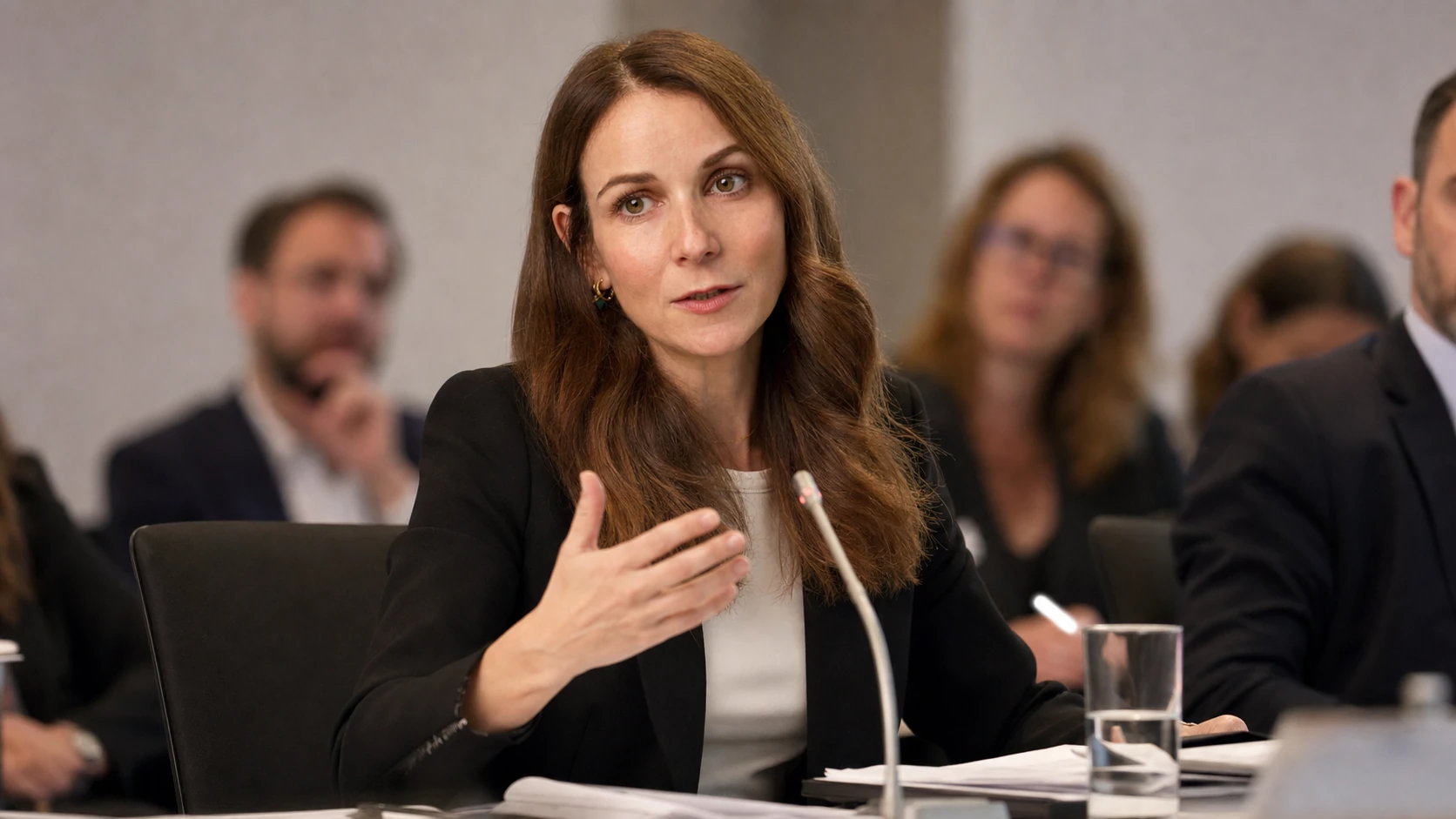
The IEA is a British free-market think tank that publishes research and commentary on economics, taxation, regulation, public spending, welfare, and the role of government. Denham’s appointment placed her in charge of communications, public affairs, and digital output.
Her arrival came during the first phase of the Covid-19 pandemic. Questions about lockdowns, business closures, state spending, furlough payments, public health restrictions, and personal freedom quickly became central to British political debate.
Denham appeared on television and radio to discuss those issues and others connected to the economy. She also wrote about employment, entrepreneurship, energy policy, government intervention, and the effect of restrictions on businesses and individuals.
Her work at the IEA strengthened her identity as a free-market commentator. It also made her more visible to national audiences, particularly through news reviews, panel discussions, and interviews.
By the time she left the organisation, Denham had gained experience in journalism, policy research, political communication, and broadcasting. That mixture prepared her for a senior role on a national newspaper’s opinion desk.
Career at The Telegraph
Denham joined The Telegraph and became closely associated with its Comment and Opinion coverage. By 2023, she was publicly identified as deputy comment editor.

The job involved more than publishing her own views. A comment editor commissions writers, shapes arguments, edits submissions, responds to breaking news, and helps decide which ideas the newspaper will present to readers.
Denham also continued writing under her own name. Her columns have addressed employment law, childcare, welfare, taxation, immigration, fertility, the civil service, working from home, and the changing appeal of Britain’s political parties.
Her position later developed into that of columnist and senior political commentator. By 2026, The Telegraph described her in those terms while noting that she had previously edited its Comment and Opinion pages.
The shift made her more visible as an individual writer. Rather than working mainly behind the scenes, she increasingly appeared as a named analyst of political events.
Her commentary often reflects an economically liberal outlook. She tends to question large government programmes, extensive regulation, high public spending, and state control over employment or family policy.
That does not mean every article can be reduced to one ideological label. Her writing also draws on her earlier work with entrepreneurs, women in business, and people affected by childcare or workplace rules.
Television Appearances and Public Recognition
Denham has appeared on BBC, Sky News, Channel 5, and other British broadcasters. Her television work usually centres on newspaper reviews, political discussion, and policy debate.
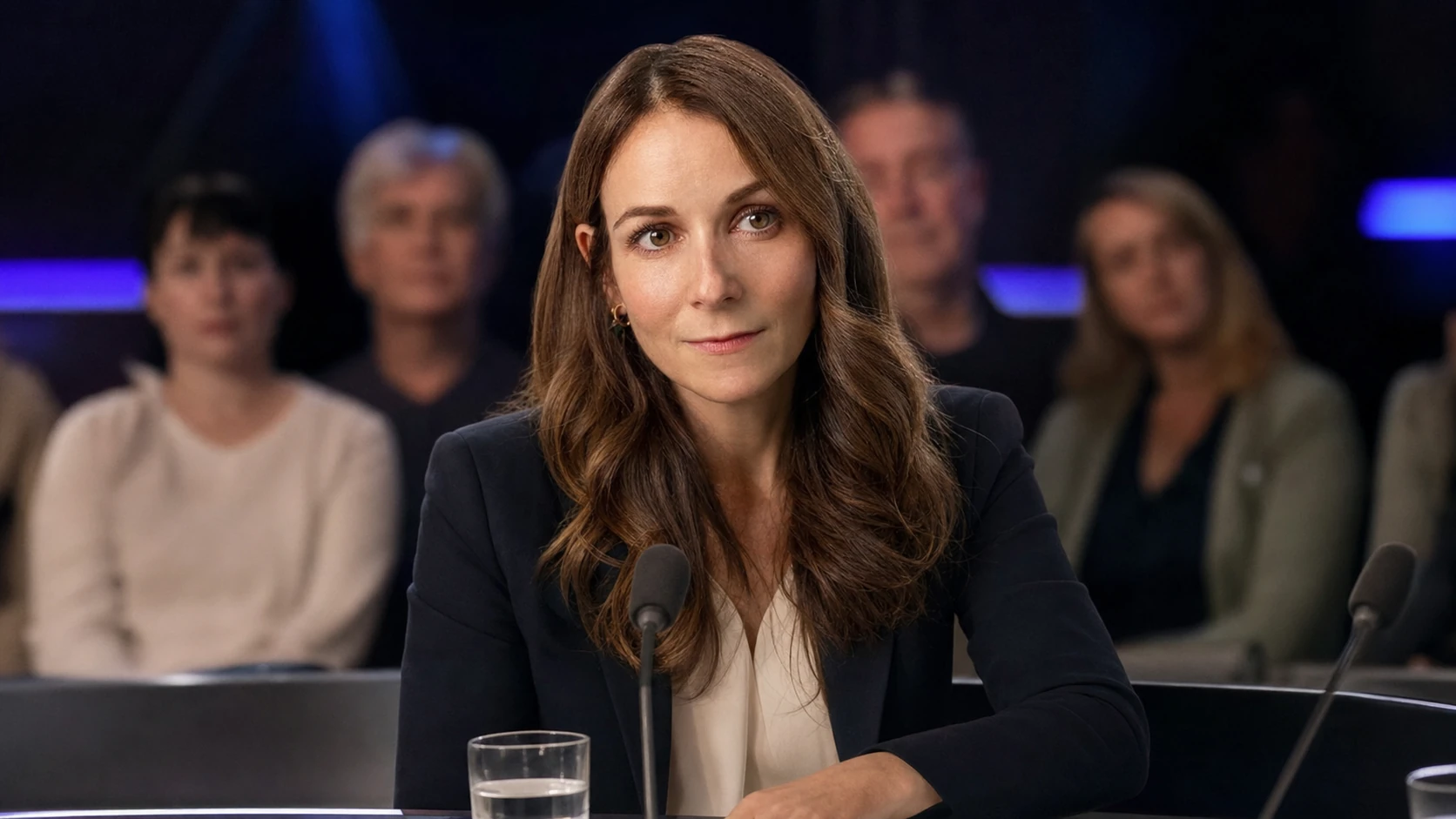
She appeared on BBC Question Time several times between 2025 and 2026. The programme brought her to an audience that may not regularly read opinion pages or policy publications.
Her appearances often placed her alongside politicians, journalists, academics, and campaigners with sharply different views. The format suited her background because it required quick responses, familiarity with current affairs, and the ability to defend a clear position.
Television exposure also helps explain the growing interest in her age and personal life. Viewers often search for basic background information about panellists who appear regularly without having a celebrity-style public biography.
Denham’s recognition rests mainly on the strength and frequency of her arguments rather than on entertainment coverage. She is known as a commentator who takes firm positions on contested subjects and is willing to defend them in print and on air.
Political Views and Public Image
Annabel Denham is generally associated with free-market and centre-right political commentary. Her career at The Entrepreneurs Network and the Institute of Economic Affairs placed her within organisations that favour private enterprise, lower regulation, and a limited role for the state.
Her columns frequently question government spending, expanded employment protections, centralised childcare policy, and restrictions on business. She has also written about migration, public services, population decline, family formation, and party politics.
Supporters may see her as a direct writer who applies economic arguments to everyday policy. Critics may disagree with her assumptions about markets, welfare, public services, or the balance between employer flexibility and worker protection.
Her public style is clear rather than detached. She writes opinion journalism, so readers should expect an argument rather than the neutral presentation associated with straight news reporting.
Denham’s professional identity remains tied to ideas. She does not appear to rely heavily on personal branding, lifestyle coverage, or public discussion of her private life.
Marriage, Children, and Private Life
Annabel Denham’s current relationship or marital status is not publicly confirmed. Reliable biographies do not identify a husband, wife, partner, or former spouse.
She has written publicly about her own experience of giving birth through the NHS. That provides evidence that she is a mother, but she has not published a detailed account of her child or family structure.
The number, names, ages, and personal circumstances of her children are not publicly confirmed. Those details should remain private unless Denham chooses to discuss them herself.
Her writing about motherhood has usually appeared in the context of public policy, including maternity care, childcare, employment, and the pressures faced by parents. She has not turned her family life into a separate public career.
This boundary is consistent with the rest of her biography. Denham speaks openly about politics and policy while keeping relationships, family history, and domestic life largely outside public view.
Net Worth and Income Sources
Annabel Denham’s net worth has not been publicly confirmed. She has not released financial statements, and no credible reporting provides a dependable estimate of her personal wealth.
Her income has likely come from salaried roles in journalism, policy organisations, communications, editing, and broadcasting. She may also receive fees for writing, speaking, or television appearances, but the amounts are private.
Online figures that assign her a precise net worth should be treated cautiously. They are usually based on generic assumptions about media salaries rather than contracts, company records, or verified assets.
Denham’s career has included senior positions, but job titles alone cannot establish personal wealth. Salary, property, investments, debts, and family finances are not available in the public record.
The responsible answer is that her financial position is unknown. Any exact figure would be speculation.
Recent Work and Current Status
Denham remained active in political journalism through 2024, 2025, and 2026. Her writing covered British government policy, employment, family life, migration, taxation, and the changing fortunes of political parties.
Her public profile grew during 2025 through appearances on BBC Question Time. She continued contributing to national debate as both a newspaper columnist and television commentator.
By 2026, she was identified as a senior political commentator and columnist at The Telegraph. She also continued engaging with policy questions outside the daily newspaper cycle.
In February 2026, Denham co-authored an Institute of Economic Affairs discussion paper with economist Len Shackleton on flexible working. The paper examined the benefits and costs of different working arrangements and questioned the value of applying one legal model across all employers.
The project showed that her connection to policy research had continued after she moved into a senior newspaper role. Her career now combines opinion writing, broadcasting, editing experience, and longer-form policy analysis.
Frequently Asked Questions
How old is Annabel Denham?
Annabel Denham’s exact age is not publicly confirmed. Based on her university attendance from 2004 onward, she is likely around 40 as of 2026, with a cautious estimated range of about 39 to 42.
What is Annabel Denham’s date of birth?
Her date of birth has not been published by a reliable first-party source. Claims that give an exact day, month, or year should not be treated as confirmed unless supported by dependable evidence.
What does Annabel Denham do?
She is a British journalist, columnist, editor, and political commentator. As of 2026, she works as a senior political commentator and columnist at The Telegraph.
Where did Annabel Denham study?
She studied History and French at the University of Manchester from 2004 to 2008. She later completed a master’s degree in International Studies and Diplomacy at SOAS University of London.
Is Annabel Denham married?
Her marital and relationship status is not publicly confirmed. She has kept that part of her life outside her professional biography.
Does Annabel Denham have children?
Denham has written about her personal experience of giving birth, confirming that she is a mother. Further details about her child or children have not been publicly confirmed.
What is Annabel Denham’s net worth?
Her net worth is unknown. No credible source has published a verified figure, and precise estimates found on biography websites are speculative.
Conclusion
Annabel Denham’s exact age remains private, but her career can be traced in detail. Her university years suggest that she is around 40 in 2026, although no confirmed birth date allows a more precise answer.
Her professional path has been unusually consistent. From Parliament and business journalism to entrepreneurship research, think-tank communications, newspaper editing, and television debate, she has stayed close to questions about markets, government, work, and personal freedom.
Denham’s reputation comes from argument rather than personal publicity. She has become a recognisable voice in British political media while keeping much of her family background and private life outside the public record.
That distinction matters. Her age may remain uncertain, but her public place is clear: she is an established commentator whose work connects Westminster politics, economic policy, journalism, and the wider debate over how Britain should be governed.